E-Commerce Websites for Boutique Brands
We build custom storefronts for brands a template can't hold: editorial design, inventory modeled the way you actually sell, and checkout flows tuned to your price point.
Live storefronts, each a completely different way of selling.
Why Boutique Brands Outgrow Template Storefronts
Off-the-shelf storefronts are built for commodity selling: identical SKUs, deep stock, race-to-the-bottom pricing. A boutique brand wins on the opposite: story, scarcity, and trust. When your shop runs on the same theme as ten thousand others, the thing that makes you worth a premium is exactly what the template flattens out.
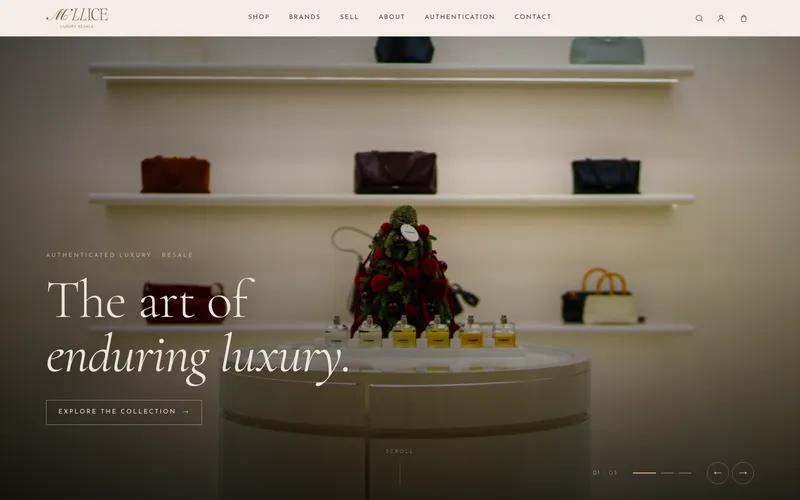
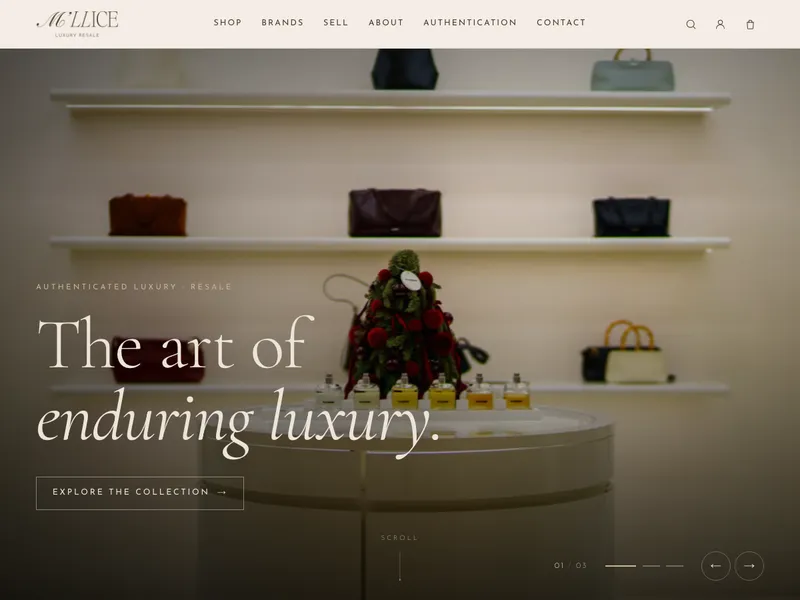
M'llice is the clearest case we've built. A luxury resale house selling authenticated designer handbags can't look like a generic shop, and its inventory doesn't behave like one either: every piece is one-of-a-kind, sourced from consignors, verified by specialists, and gone the moment it sells. That demanded a custom catalog model, a consignment intake flow, and an editorial brand world calm enough to sell four-figure pieces.
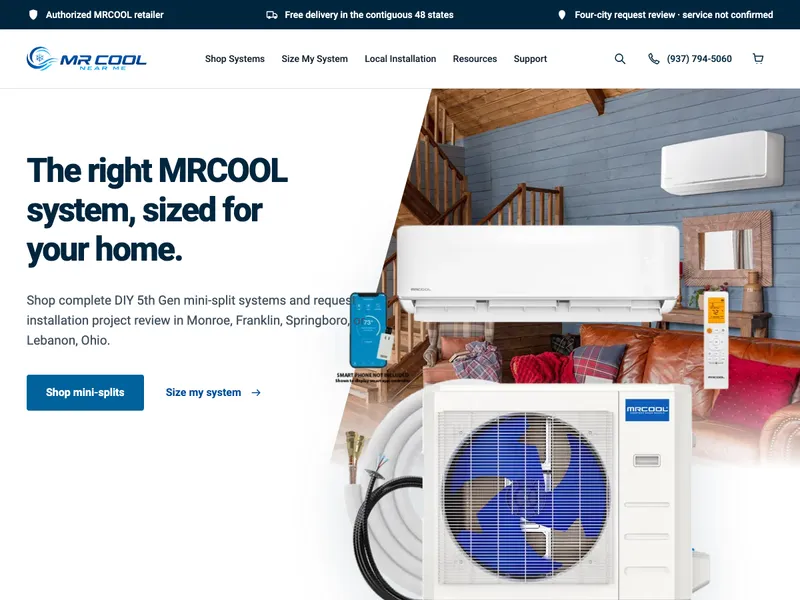
The same thinking scales down as well as up. Meals by Emily sells four revenue streams — meal prep, private-chef events, custom plans, and a bakery — through one storefront tuned for repeat ordering. Black Dog Bees sells farm honey and maple syrup with a story-first storefront. MRCOOL Near Me sells DIY mini-split systems through a Shopify-backed storefront whose sizing tool walks a homeowner from rooms and voltage to one exact configuration, because a four-figure HVAC purchase needs guidance, not just a product grid. Different price points, different rhythms. Each one modeled on how that business actually sells.
One Storefront, Two-Sided Commerce.
M'llice doesn't just sell. It acquires, authenticates, and then sells. The website runs all three, and no off-the-shelf theme models even one of them well.
- 01 · Intake
Sell: a Considered Submission Flow
M'llice sources inventory from its own customers. The Sell page walks a consignor through photos and details, and promises a specialist review within two business days.
- 02 · Trust
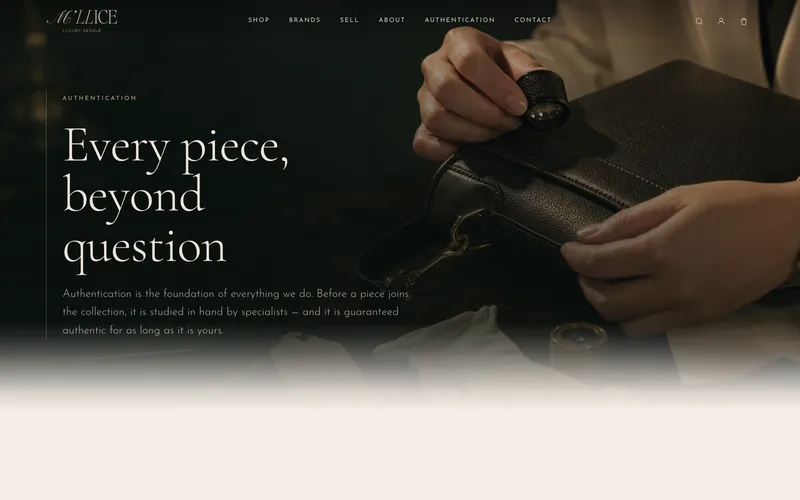
Authentication: the Brand Promise
Every piece is studied in hand by specialists before it joins the collection. A dedicated dark-editorial page tells that story, because at this price point trust is the product.
- 03 · Sale
Shop: One-of-One, Then Gone
Each handbag is unique inventory: when a piece finds its next home, it leaves the collection for good. The catalog, filters, and availability states are all built around that.
Subscriptions, pre-orders, made-to-order, local pickup, wholesale alongside retail. Whatever shape your selling takes, the storefront should be built around it. That's the custom part.
Built to Sell What Templates Can't
Everything a boutique storefront needs to earn premium prices. Designed around your brand and your inventory, not a theme's assumptions.
An Editorial Brand World
A storefront that reads like your brand, not like a theme: typography, photography, and pacing composed for the products you actually sell, from luxury handbags to farm-stand honey.
Inventory Built Your Way
One-of-a-kind consignment pieces, meal-prep subscriptions, seasonal farm stock. We model the catalog around how your inventory really works instead of forcing it into a template's idea of a product.
Trust Pages That Convert
High-consideration purchases need more than a product grid. Authentication guarantees, sourcing stories, and process pages give buyers the confidence to spend real money with a boutique.
Checkout Without Friction
Secure payments, accounts, and a purchase flow tuned to your price point, whether that's a $12 jar of honey on a repeat order or a four-figure authenticated handbag.
Seller & Member Flows
Consignment intake forms, sell-to-us submissions, wishlists, and first-access email lists. The two-sided flows off-the-shelf storefronts make you bolt on, built in from day one.
Merchandising Controls
Curated collections, brand indexes, availability states, and editorial slots you manage yourself, so the storefront stays fresh without a developer in the loop.
Inside the M'llice Build
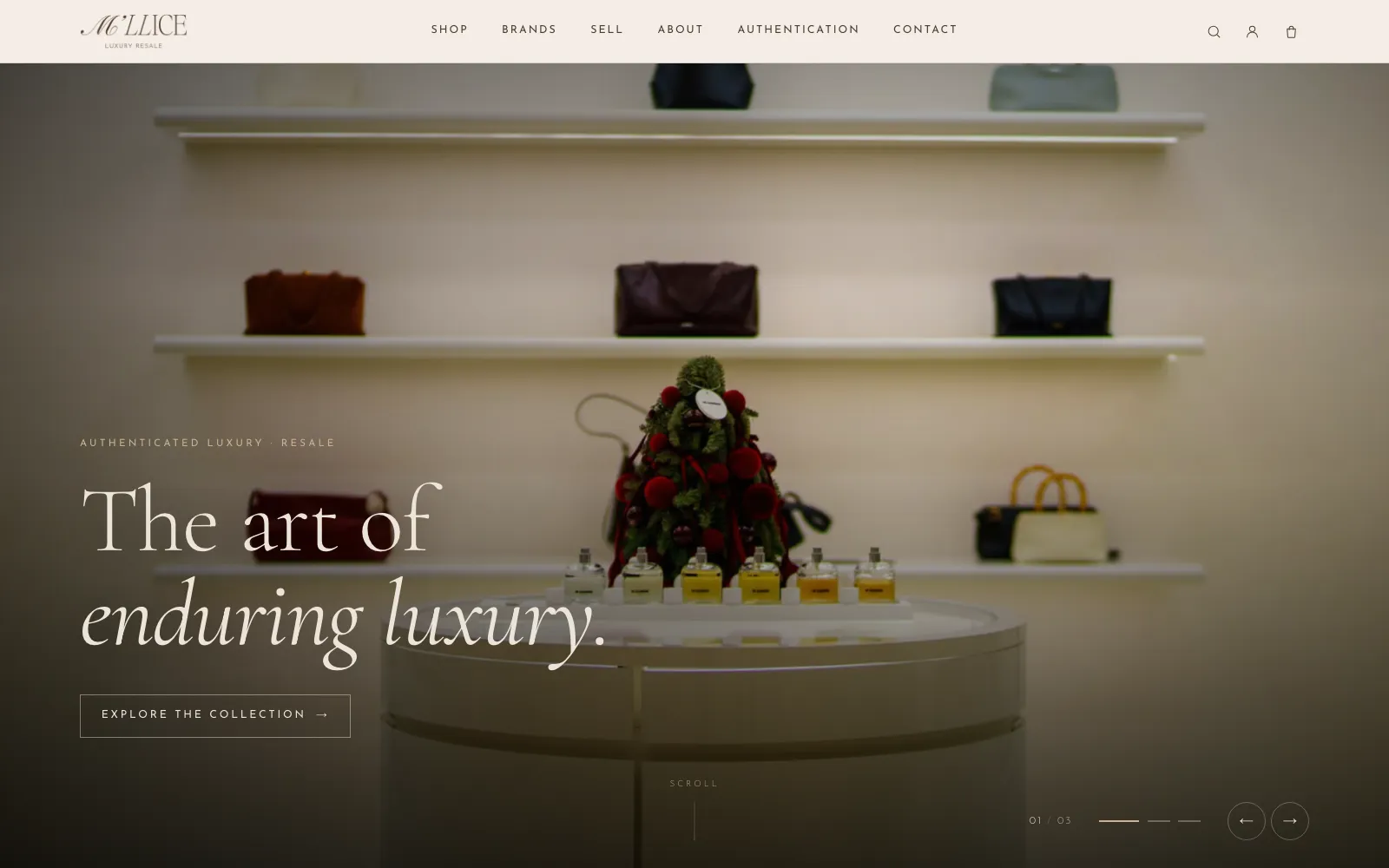
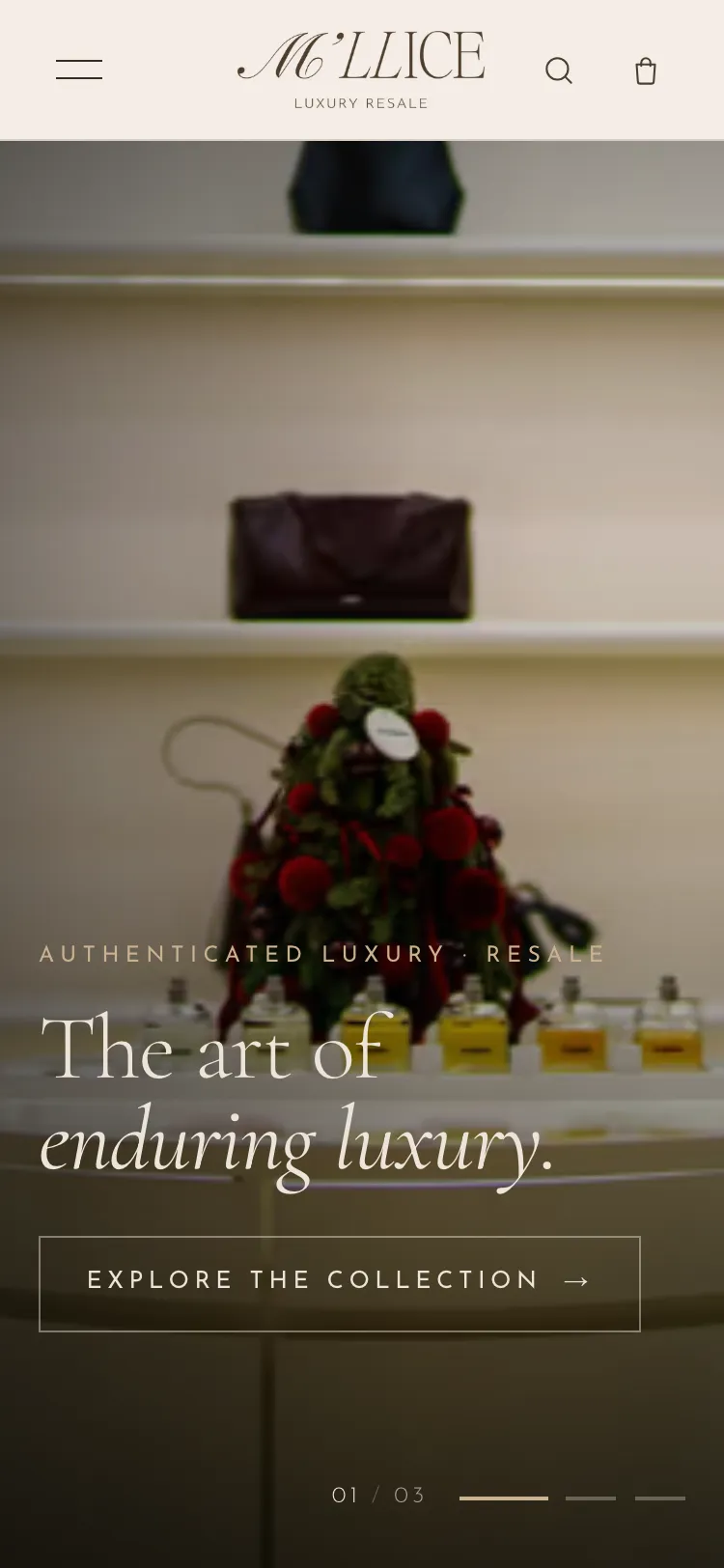
An editorial brand world, a one-of-one catalog, and a consignment engine, composed into a storefront calm enough to sell four-figure handbags.
The Brand World Does the Selling
Serif editorial typography, gallery photography, and an unhurried pace. The storefront earns luxury pricing before a single product page opens.
A Catalog Built for One-of-One
Brand index, condition and availability filters, and sold-state handling, all modeled around pieces that exist exactly once.
Acquisition Is Part of the Site
The Sell flow brings consignors in and the Authentication page closes the trust loop. The storefront feeds its own inventory.
Ready for a Storefront That Earns Premium Prices?
Stop squeezing your brand into someone else's theme. Schedule a free consultation and let's design the store your products deserve.