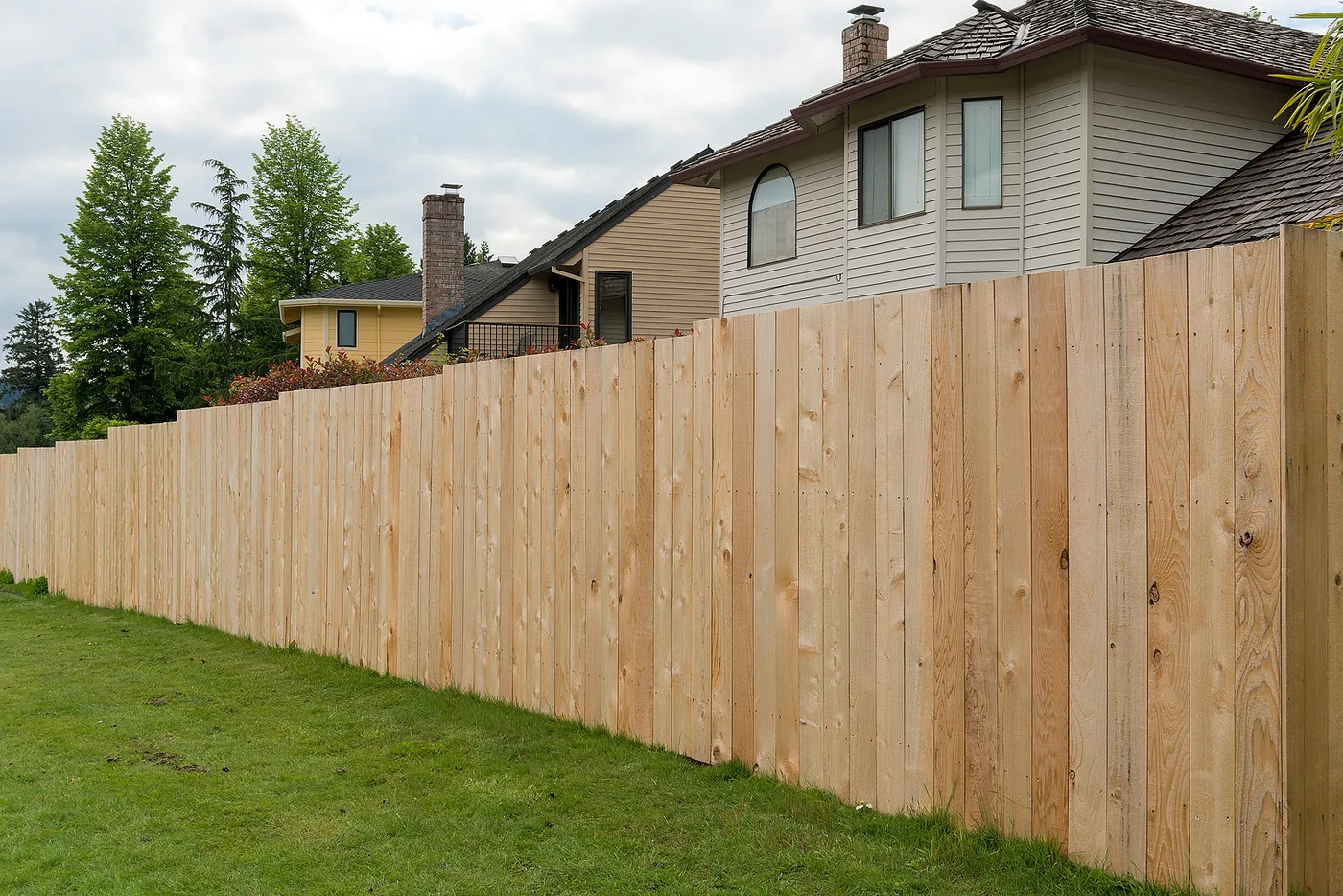
A homeowner stands in their backyard at 9pm with a tape measure, deciding whether to replace the sagging cedar privacy fence the dog keeps escaping through. The next thing they do is not call you. They pull out their phone and type "vinyl fence installation" plus the name of their town. Whoever shows up in those first few results gets the call, the on-site visit, and the three-to-eight-thousand-dollar project. Everyone else finds out months later, when they spot the new fence going up next door.
Most fence companies we talk to are excellent installers and nearly invisible online. They run on referrals and the occasional shared lead from Angi or Thumbtack, while a competitor with a handful of fence-type pages and a finished Google Business Profile quietly owns the local search results. Closing that gap comes down to a few specific moves: a site that actually shows your work, a page for every kind of fence you build, a quote form people will finish on their phone, and a Maps listing that ranks. Here is how each piece fits together.
The Online Fencing Market Opportunity
The fencing industry has a unique advantage online: fence projects are high-value. The average residential fence installation ranges from $2,500 to $8,000, with commercial projects running significantly higher. This means every lead you capture online has substantial revenue potential—far more than many other home service categories.
Why Fencing Leads Are Uniquely Valuable
High average project value: A single fence installation lead is worth $2,500–$8,000+ in revenue, making the cost-per-lead math extremely favorable for online marketing
Low competition online: Most fence companies still rely on offline marketing, meaning the companies that invest in websites and SEO have a massive competitive advantage
Visual-first purchase decision: Homeowners want to see fence styles, materials, and completed projects before reaching out. A gallery-rich website converts at significantly higher rates
Local search dominance potential: Fencing searches are almost exclusively local, making it possible for even small companies to rank #1 in their service area with the right strategy
Here's the reality: when a homeowner searches "fence company near me" or "vinyl fence installation [city]," they're going to see 3 businesses in the Google Maps pack and 10 organic results. If your company isn't showing up, you're invisible to the 83% of homeowners who start their fence buying journey online.
The Lead Aggregator Problem
Many fence companies spend $100–$200 per lead on HomeAdvisor, Angi, or Thumbtack—and those leads are shared with 3–4 competitors. A professional website generating organic leads costs $0 per lead after the initial investment, and those leads are exclusive to you. Over 12 months, this difference can add up to $20,000–$50,000 in savings.
Essential Website Features for Fence Companies
A fencing company website needs to accomplish three things: showcase your work, build trust, and make it easy to request a quote. Every design decision should serve one of these purposes. Let's look at the essential features that separate high-converting fence company websites from digital brochures that collect dust.
Project Photo Gallery
Fencing is a visual purchase. Homeowners want to see what their yard could look like. Build a filterable gallery organized by fence type (wood, vinyl, chain-link, iron, commercial) with high-quality photos of completed installations. Include before-and-after shots whenever possible.
Instant Quote Calculator
While exact quotes require an on-site visit, an interactive estimator that asks for fence type, linear footage, and gate requirements gives customers a ballpark range and captures their contact information. This dramatically increases form completions versus a generic "Contact Us" form.
Service Area Map
Embed an interactive map showing exactly which cities and counties you serve. This immediately answers the customer's first question ("Do they serve my area?") and signals to Google the geographic areas you cover for local SEO purposes.
Financing Information
Fence projects are significant investments. If you offer financing, feature it prominently on your website with monthly payment examples. "Your new privacy fence for as low as $89/month" removes the cost barrier and increases lead volume from budget-conscious homeowners.
Material Comparison Guide
Create a side-by-side comparison of fence materials including cost ranges, lifespan, maintenance requirements, and best use cases. This positions you as an expert, keeps visitors on your site longer, and helps them self-select the right product before contacting you.
License & Warranty Info
Display your contractor's license, insurance coverage, manufacturer warranties, and your own workmanship guarantee. Fence installations are expensive—customers need to trust that you'll stand behind your work for years to come.
Real Results: Buffalo Ridge Fence
When we built the Buffalo Ridge Fence website, we focused on a filterable project gallery, service area pages, and a streamlined quote request flow. The result was a 200% increase in qualified leads within the first 90 days. Most of those leads came from fence-type-specific pages that ranked in the top 3 for local search terms.
Creating Pages for Each Fence Type
This is the single most impactful SEO strategy for fencing companies: create a dedicated page for every type of fence you install. When a homeowner searches "vinyl fence installation in [city]," they want to land on a page specifically about vinyl fencing—not a generic services page that mentions five different materials in a single paragraph.
Fence Type Pages to Create
- Wood fence page: Cover cedar, pine, and pressure-treated options. Discuss privacy fence vs. picket fence styles, staining/sealing requirements, and typical lifespan. Include a gallery of wood fence projects
- Vinyl/PVC fence page: Highlight the low-maintenance benefits, color options, wind resistance ratings, and lifetime warranty advantages. Compare vinyl vs. wood cost over 20 years
- Chain-link fence page: Target budget-conscious customers and commercial/industrial applications. Cover height options, privacy slats, vinyl coating, and gate configurations
- Ornamental iron/aluminum page: Showcase decorative designs, pool code compliance, and the premium aesthetic. Feature high-end residential and commercial installations
- Commercial fencing page: Cover security fencing, temporary construction fencing, sports court fencing, and large-scale property perimeter solutions
- Farm/ranch fencing page: If applicable, cover post-and-rail, barbed wire, field fence, and horse-safe fencing options for agricultural customers
What Each Fence Type Page Should Include
Hero section: A stunning photo of a completed project in that fence type with a headline and quote request CTA
Benefits section: 4-6 benefits of that specific fence material (durability, maintenance, aesthetics, cost-effectiveness)
Style gallery: 6-12 photos of different styles within that fence type, with captions describing the project
Pricing range: General per-linear-foot pricing range to set expectations (e.g., "Wood privacy fences typically range from $25–$45 per linear foot installed")
FAQ section: 5-8 frequently asked questions specific to that fence type, marked up with FAQ schema for potential Google featured snippets
Quote CTA: A prominent "Get Your Free [Fence Type] Quote" button that leads to your quote form, pre-selecting the fence type
Real Results: Midwest Fence ICT
For the Midwest Fence ICT project, we created individual pages for each fence type they install, complete with project galleries, pricing ranges, and FAQ sections. This fence-type page strategy helped them go from zero online presence to first-page rankings for key local search terms and 30+ monthly quote requests within months of launch.
Optimizing Quote Request Forms
Your quote request form is the most important conversion point on your fencing website. Every design choice, field, and piece of copy on and around this form directly impacts how many leads you generate. A poorly designed form can cut your conversions in half, while an optimized one can double them.
The Ideal Fencing Quote Request Form
Field 1 — Name: First and last name (single field is fine)
Field 2 — Phone: Primary phone number with tel input type for mobile auto-formatting
Field 3 — Email: Email address for follow-up
Field 4 — Address/City: Service address or city (to verify they're in your service area)
Field 5 — Fence Type: Dropdown: Wood, Vinyl, Chain-Link, Iron/Aluminum, Commercial, Not Sure
Field 6 — Project Details: Optional textarea for approximate footage, timeline, or special requirements
- Keep it to 6 fields or fewer: Every additional form field reduces completion rates by approximately 11%. Only ask for what you need to qualify the lead
- Use a benefit-driven CTA button: Instead of "Submit," use "Get My Free Quote" or "Request Your Free Estimate." This reminds users what they're getting
- Add social proof near the form: Display your Google review rating, number of projects completed, or a brief testimonial right next to the form
- Set response time expectations: "We respond to all quote requests within 2 business hours" sets expectations and gives users confidence that submitting the form is worthwhile
- Mobile-optimize the form: Use large tap targets, auto-capitalization for name fields, numeric keyboard for phone, and email keyboard for email fields
- Add a phone alternative: Below the form, add "Prefer to call? (857) 380-0070" with a click-to-call link for users who'd rather talk than type
Form Placement Matters
Place your quote request form in at least three locations: (1) a sticky CTA in your header that links to the form, (2) embedded within your fence type pages after the benefits section, and (3) as a dedicated "/free-quote" page. The more accessible your form is, the more leads you'll capture.
Google Maps & Local Pack Strategy
For fencing companies, the Google Maps Local Pack is where the majority of high-intent leads come from. When someone searches "fence company near me" or "fence installation [city]," the top 3 Google Maps results get approximately 44% of all clicks. Ranking in that Local Pack is the single highest-ROI marketing investment you can make.
Google Business Profile Optimization for Fence Companies
- Primary category: Set to "Fence Contractor" — this is the most important ranking factor for your GBP listing
- Secondary categories: Add "Fence Supply Store" (if applicable), "Gate Contractor," and "Deck Builder" (if you offer it)
- Service area: List every city, town, and county you serve. Be specific—Google uses this to match you with local searches
- Services list: Add every service with descriptions: wood fence installation, vinyl fence installation, fence repair, gate installation, commercial fencing, etc.
- Photos: Upload 50+ photos minimum, organized by fence type. Listings with more photos get significantly more engagement
- Posts: Publish a GBP post at least once per week showcasing completed projects, seasonal offers, or customer testimonials
Citation Building for Fence Companies
NAP consistency: Your business Name, Address, and Phone number must be identical across your website, Google Business Profile, and every directory listing. Even small inconsistencies (Ave vs. Avenue) can hurt rankings.
Industry-specific directories: List your business on HomeAdvisor, Angi, Thumbtack, Houzz, Fence-specialists.com, and local chamber of commerce directories.
General directories: Ensure you're listed on Yelp, BBB, Yellow Pages, Manta, and local city directories. These citations reinforce your legitimacy to Google.
Review generation: Focus on Google reviews above all else. The quantity and quality of your Google reviews is the #2 ranking factor for the Local Pack after GBP category relevance.
Local Pack Ranking Factors for Fence Companies
Google's Local Pack rankings are determined by three factors: Relevance (how well your profile matches the search), Distance (proximity to the searcher), and Prominence (reviews, citations, and website authority). You can't control distance, but you can maximize relevance and prominence through a complete GBP profile, consistent citations, and a steady stream of Google reviews. Learn more in our Google Business Profile Guide.
Content Marketing for Fence Companies
Content marketing for fencing companies isn't about writing generic blog posts nobody reads. It's about creating strategic content that answers the exact questions your potential customers are searching for and positions your company as the local authority on fencing. Done right, content marketing generates a steady stream of organic traffic that converts into quote requests.
Educational Content Ideas
- "Wood vs. Vinyl Fence: Which Is Right for Your Yard?" — Comparison content ranks well and captures buyers in the decision phase
- "How Much Does a Fence Cost in [City]?" — Cost content is the #1 searched fencing topic and generates high-intent leads
- "Do I Need a Permit for a Fence in [City/County]?" — Local permit info positions you as the local expert
- "How Long Does Fence Installation Take?" — Timeline content answers a top buyer concern
Project Showcase Content
- Monthly project spotlight: Feature a completed project with photos, customer story, and material details
- Neighborhood transformation: "See How [Neighborhood] Homeowners Are Upgrading Their Fences"
- Commercial case study: Document a large commercial project with before/after and client testimonial
- Seasonal preparation: "Preparing Your Fence for Winter" or "Spring Fence Maintenance Checklist"
Content That Converts Visitors into Leads
Fence style inspiration galleries: Create visually-rich pages showcasing different fence styles for specific use cases—pool fencing, dog fencing, privacy screening, front yard decorative fencing. These pages attract homeowners in the early planning stage.
Local regulation guides: Publish detailed guides on fence height restrictions, setback requirements, HOA regulations, and permit processes for each city you serve. This content ranks extremely well and positions you as the local expert.
Fence maintenance guides: "How to Stain a Cedar Fence" or "When to Repair vs. Replace Your Fence" content brings in organic traffic from existing fence owners who may need repairs or replacements.
Video content: Short videos of installations (time-lapse), material explanations, and customer testimonials perform exceptionally well on both your website and social media.
Content Calendar for Fence Companies
Publish at least 2 pieces of content per month: one educational/comparison article and one project showcase. Promote each piece through your Google Business Profile posts and social media channels. Within 6-12 months, this consistent content strategy will build a steady flow of organic traffic that generates leads without ongoing ad spend.
Building an online lead generation system for your fencing company isn't complicated, but it does require a strategic approach. A professional fencing website with fence-type pages, optimized quote forms, strong local SEO, and consistent content marketing will generate more leads than any combination of yard signs and word-of-mouth ever could.
Ready to Generate More Fencing Leads Online?
At Heck of a Website, we've helped fencing companies like Buffalo Ridge Fence and Midwest Fence ICT build websites that generate real leads. We understand the fencing industry and design every site for maximum quote request conversion. Schedule a free consultation to discuss your fencing company's online strategy.